
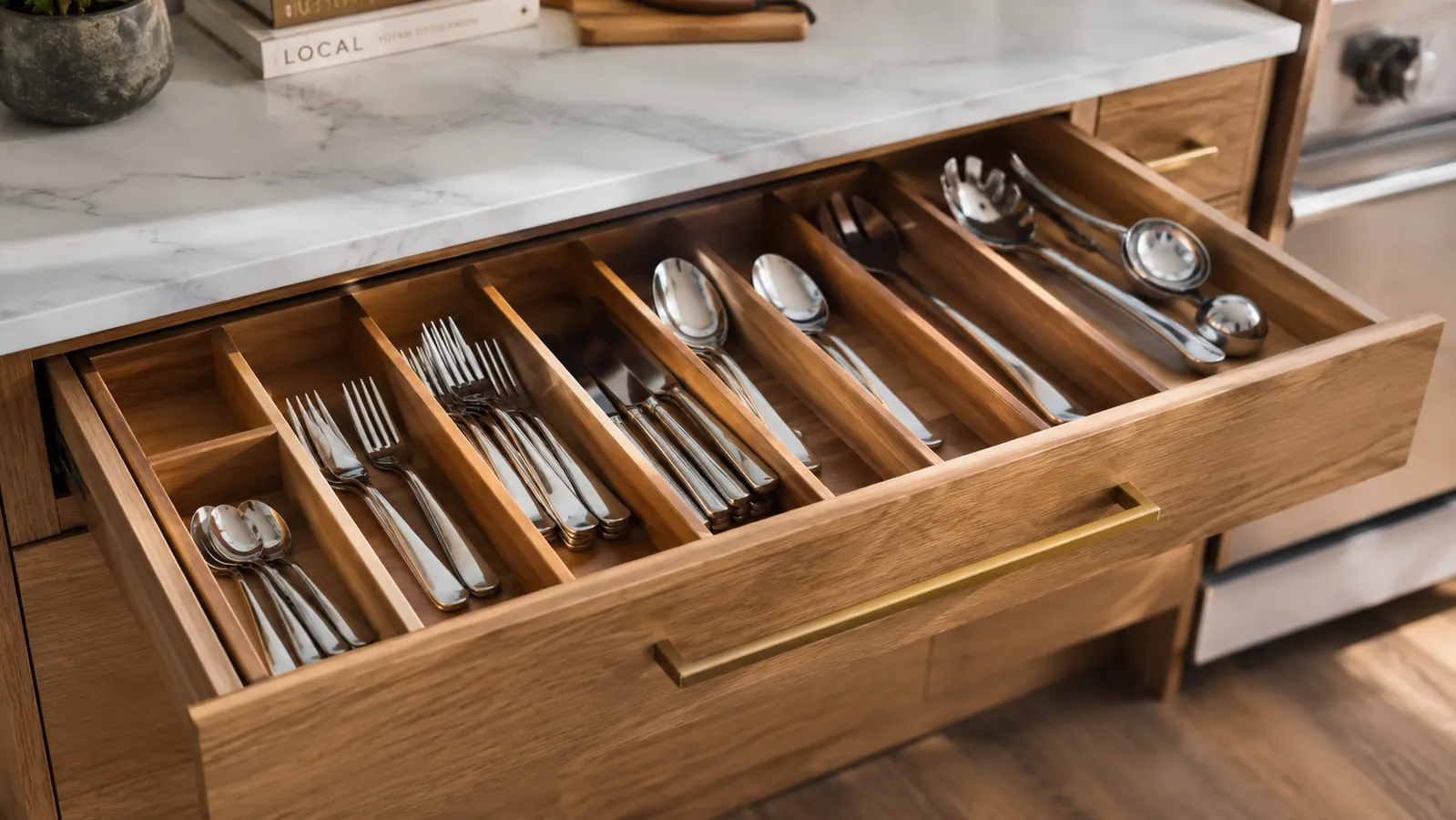
I am not the person who color-codes their pantry. My silverware drawer had been a pile for two years before I finally bought the Lifewit Expandable Silverware Organizer. The trigger was opening the drawer in front of a guest and watching a fork slide off the edge and clatter onto the floor. At under nine dollars with 30,555 Amazon reviews rated 4.6 stars, I figured the downside was exactly nine dollars. I bought it on a Wednesday and spent the next several months paying attention to all the things those 30,000 reviewers never got around to mentioning.
This is not a five-star-everything write-up. The Lifewit tray is genuinely good, and I still use it. But the listing photos are optimistic, the dimensions have some fine print, and if you are a messy cook rather than a tidy one, there are a few gotchas you should know before you slide this into your drawer. Here is the unvarnished version.
The Quick Verdict
Earns its drawer space if you know what you are getting. The width range is the real value. The depth and slot width are smaller than the listing photos imply.
Amazon Check Today's Price →If your silverware drawer is still a daily argument, nine dollars fixes it. But read the fine print on dimensions first.
The Lifewit expands from roughly 13 to 18.5 inches wide, which covers most standard apartment drawers without any cutting or shimming. BPA-free, dishwasher safe, and straightforward to set up in under five minutes. Check today's price before it changes.
Amazon Check Today's Price on Amazon →What the Listing Photos Do Not Tell You
The Amazon listing shows the tray in a clean white drawer with precisely spaced silverware and a few decorative herbs or something in the background. Everything looks large and airy. The tray looks roomy. That image is doing a lot of work that reality does not support.
First, the slot width. The main compartments look generous in the photos because the product photographer used a small four-piece flatware set with slim tines and narrow handles. In practice each main slot is about 2.9 inches wide. A standard dinner fork fits fine. A larger serving fork, or one of those chunky flatware sets with wide handles, gets a little tight. Nothing breaks or binds, but it is snugger than the photos lead you to believe.
Second, the back channel. In the listing photos it looks like it could hold four or five cooking utensils side by side. The actual interior width of that channel is about 4.2 inches. A standard silicone spatula, laid flat, is usually around 3 inches wide at the head. So one spatula fits fine. Two spatulas start competing for space. If you were imagining a tray that holds your full set of cooking tools plus your silverware, recalibrate now.
Third, the tray looks deeper in photos than it is. The fixed depth is roughly 12.5 inches. Most kitchen drawers in standard apartments run 17 to 20 inches deep. That gap behind the tray is real estate that immediately becomes a catch-all for loose twist ties, batteries, and a backup corkscrew. If you are a messy cook, plan for that dead zone and put something there on purpose, or it will fill itself with things you forgot you owned.
The Expansion Mechanism: Good News and Fine Print
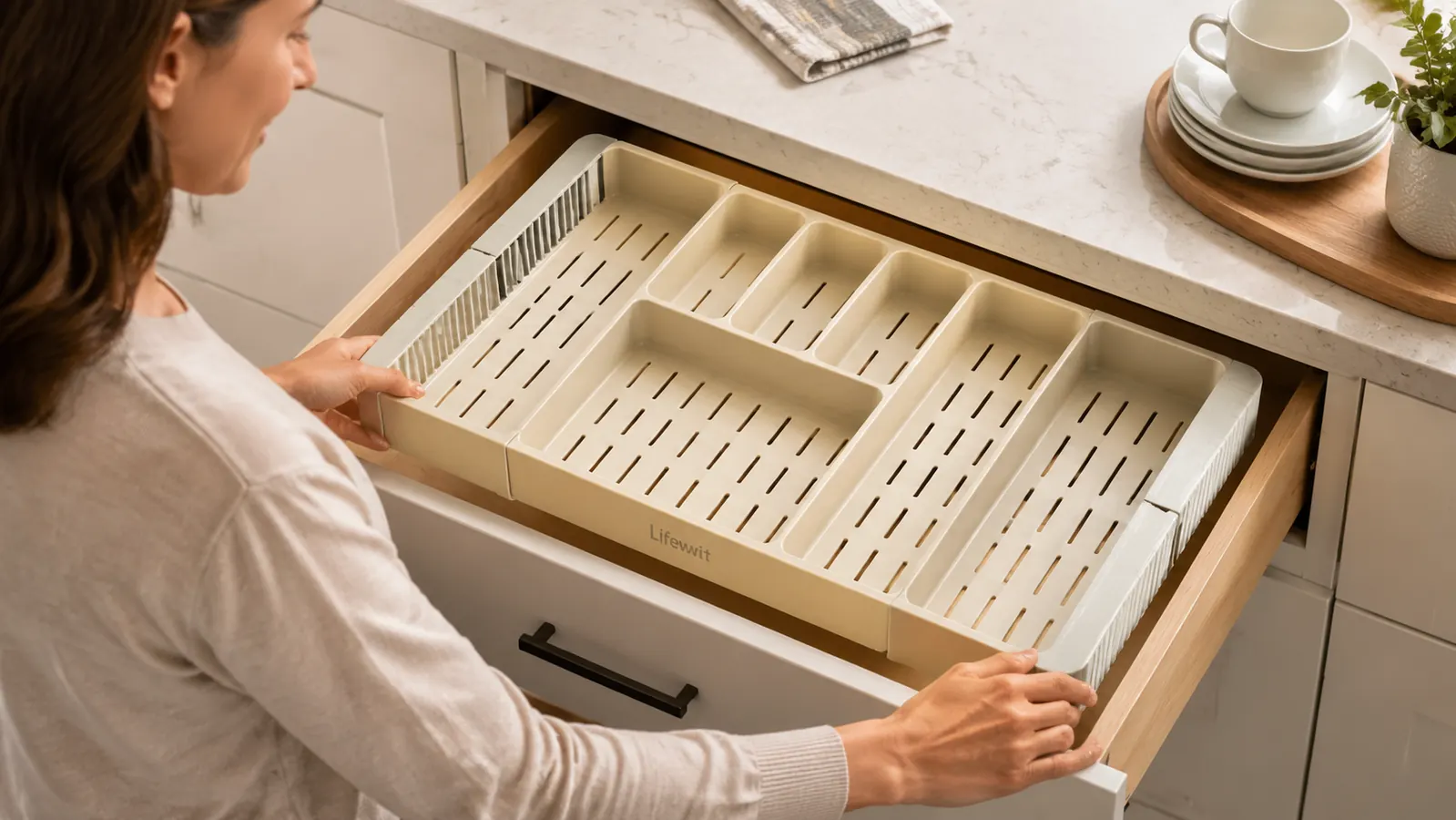
The actual standout feature on this tray is the width range, and it delivers. The side panels slide outward on a track and lock at whatever width you need. My kitchen drawer is 17.25 inches wide. I slid the panels out to 17 inches, pressed the tabs, and the tray sat snug with almost no side play. That is the problem bamboo dividers, fixed-width plastic trays, and drawer organizer inserts consistently fail to solve. Width customization without tools or cutting is genuinely useful.
Here is the fine print on the expansion: the Amazon listing advertises a range of 9.4 to 18.9 inches. What those numbers measure is the outer edge of the side panels including the lip. The usable interior width at full extension, where your silverware actually goes, runs about 17.8 inches on the unit I own. The collapsed minimum interior is closer to 12.5 inches. If you have a narrow drawer, say 10 or 11 inches wide, this tray will not collapse small enough to fit properly. It will rattle around in there. Check your drawer width before ordering.
The locking tabs feel a little cheap when you first use them. Small plastic nibs that you press while sliding the panel. After several weeks of daily use opening and closing the drawer, the tabs still hold. They have not slipped loose from drawer vibration. But if you are the kind of person who handles things aggressively, be deliberate the first time you set the width. Lock both tabs on both sides. Do not assume one tab per side is enough.
The Crumb and Stain Situation (Be Honest with Yourself)
If you are a tidy cook who wipes down your drawer weekly, this section is a non-issue. If you are me, it is relevant.
The bottom of the tray has a textured grid pattern. Its purpose is to grip the drawer liner and prevent the tray from sliding toward the front every time you pull the drawer open hard. It works. The tray does not migrate. The secondary effect is that the same grid catches crumbs, and it catches them well. Breadcrumbs, sesame seeds from a hamburger bun, rice grains. They settle into the grid and stay there until you physically rinse them out. If you go two or three weeks without cleaning under the tray, you will find a collection.
Cleaning it is simple: pull the tray out, rinse it upside-down under the tap, done. The grid releases crumbs under running water without scrubbing. The practical issue is that this is one more thing to remember to do. If your current system is a bare drawer that you never have to think about cleaning, adding a tray that needs occasional rinsing is a change in habits. For most people it takes about thirty seconds every two weeks. Worth it. But worth knowing.
Staining is a separate issue from crumbs. The interior corners, particularly where the main compartments meet the channel walls, collect residue from anything tomato-based, soy sauce, or dark sauces if you store condiment spoons in here. The plastic is white, which means staining is visible. A soft brush and dish soap clears it if you catch it before it sets. If you let it sit for a week, you may get a faint shadow that stays no matter how hard you scrub. The fix is to not let it sit. If you are a messy person, you will let it sit at least once. I did.
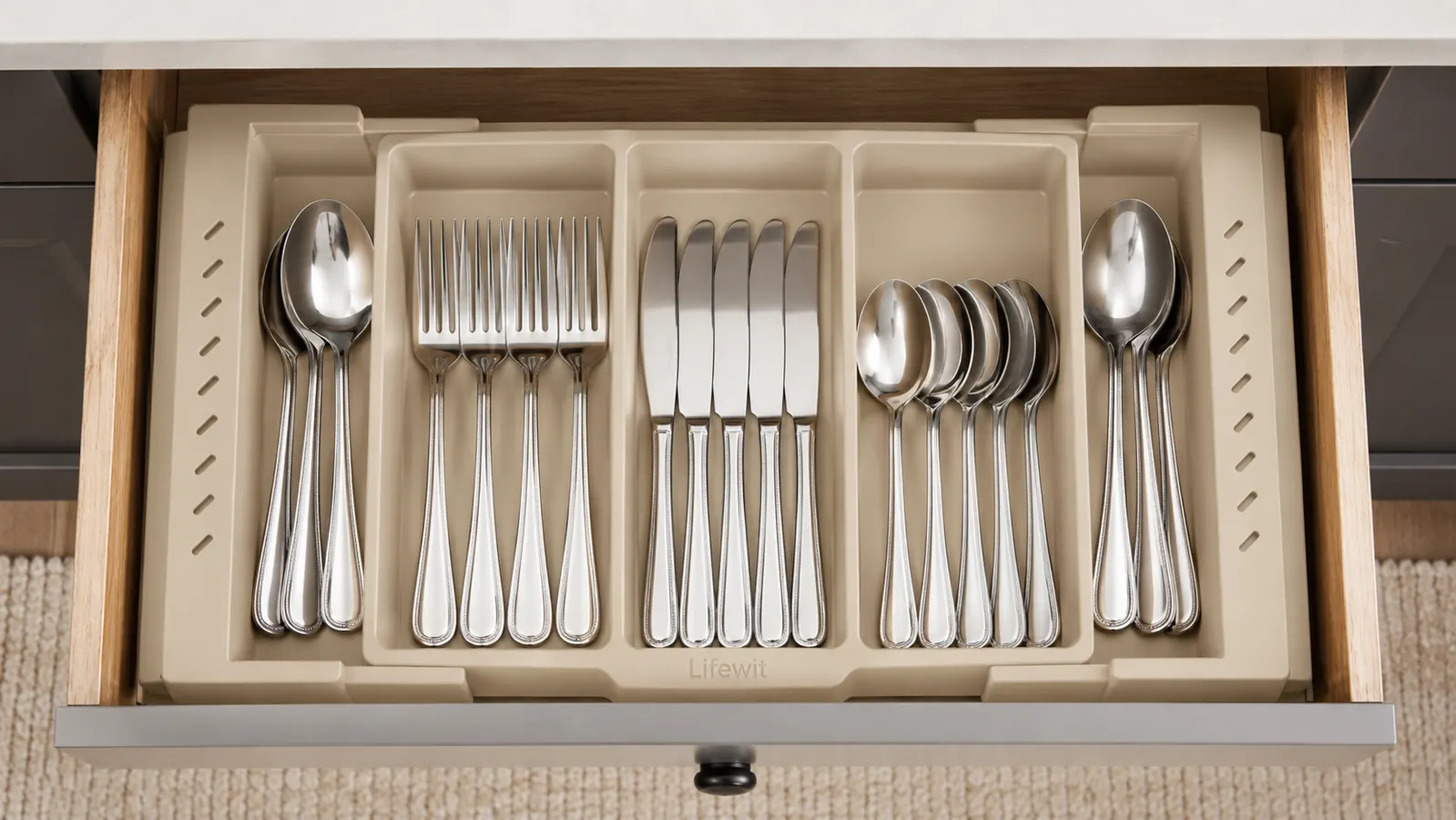
The listing photos show a pristine drawer with a perfect four-piece flatware set. What they skip is the crumb grid on the bottom, the dead zone behind the tray, and what happens when you try to fit a wide spatula in that back channel. None of these are dealbreakers. They are just things 30,000 reviewers forgot to say.
Surprises on the Upside: Things That Are Better Than Expected
The smell test. Some cheap plastic kitchen products off-gas a chemical smell for the first week. The Lifewit tray has essentially no smell out of the box. I did a sniff check before dropping it near my silverware. Nothing. That is a low bar but it is one the product clears.
The flex test. I was skeptical that a sub-nine-dollar plastic tray would hold a full load of silverware without bowing in the middle. The base plate does not flex noticeably under a standard flatware load. Bend the extended side panels hard by hand and you can feel them give slightly, but under normal drawer use they behave like a solid piece. I pressed down hard on the center of a loaded tray and felt no significant bow. Better than expected for the price.
The dishwasher result. Four full dishwasher cycles on the normal heated-dry setting, which is about as aggressive as a rental dishwasher gets. No warping, no deformation of the expansion track. The only cosmetic change is a very faint yellowing of the white plastic, which is nearly invisible unless you compare it to a brand-new unit. Functional dishwasher-safe claim is accurate.
The Messy Person Test: How This Holds Up When You Are Not Careful
Neat freaks will not stress-test this tray. I did, without meaning to. I have tossed utensils into the slots without aiming. I have closed the drawer hard enough that items bounced. I have left things soaking in the compartments overnight by accident. I have never cleaned it with anything stronger than dish soap.
Results: the locking tabs never popped loose. The corners show wear from repeated silverware drops but no cracks. The permanent stain I mentioned earlier is in the lower left corner of the back compartment from a tomato sauce spoon I left in there for five days. Cosmetically annoying. Structurally irrelevant. If you are not careful with kitchen gear, the Lifewit tray holds up to casual abuse. It is not delicate.
The bigger test for messy people is behavioral, not structural. Does the tray actually change your habits? For me, having assigned slots created a reflex I did not expect. When I pull a fork from a defined spot, I put it back in a defined spot. That is not because I became a tidier person. It is because the empty slot is a visual cue I cannot ignore. The tray does not care whether you are neat or messy. The structure does the work.
The Specific Situations Where This Tray Fails
Deep drawers. If your kitchen drawer runs 20 inches or deeper, the 12.5-inch tray leaves about 7 to 8 inches of uncovered drawer behind it. That space will collect loose items within a week unless you deliberately put a second tray, a small bin, or a divider behind the Lifewit. The tray does not come with anything to cover the gap. This is not a flaw in the product so much as a geometry problem, but it is the number one thing that will undercut the organization win if you do not plan for it.
Wide spatulas and large cooking tools. The back channel is 4.2 inches wide and about 12 inches deep. A standard silicone spatula with a wide head usually runs 2.5 to 3 inches wide and fits lying flat. A fish spatula, a wide pasta server, or anything with a head over 3 inches wide will not fit in the channel lying flat and is too tall to stand upright with the drawer closed. If your primary use case is organizing large cooking utensils alongside silverware, this is the wrong product. Use it for flatware only and keep cooking tools in a countertop crock.
Very narrow drawers. If your drawer interior is under 12.5 inches wide, the tray cannot collapse small enough to fit without side play. It will rattle every time the drawer opens. That rattling is surprisingly annoying at six in the morning. Measure before you order.
What I Liked
- Width range (roughly 13 to 18.5 inches interior) fits most standard apartment and rental drawers without tools or cutting
- Expansion tabs lock and stay locked under real daily use, including hard drawer closes
- Bottom grid grips the drawer liner and prevents migration, which matters more than it sounds
- Passes the smell test out of box, no chemical off-gassing near your silverware
- No warp, no crack, no structural failure across months of careless daily use
- Dishwasher safe and that claim holds up through actual dishwasher cycles
Where It Falls Short
- Listing photos make the slots look roomier than they are: main compartments are about 2.9 inches wide, back channel is 4.2 inches wide
- 12.5-inch fixed depth leaves a dead zone in the back of most apartment drawers that immediately collects clutter
- Bottom grid traps crumbs and needs a dedicated rinse every two weeks or so, not a major chore but a new habit
- White plastic stains visibly from tomato-based residue if left overnight, and some staining is permanent
- Does not fit drawers under about 12.5 inches wide (the tray will rattle) or large cooking utensils wider than about 3 inches
Who This Is For
Anyone in a rental with a standard silverware drawer between about 13 and 18.5 inches wide who wants a five-minute fix for the silverware pile situation. Messy people especially. The defined slots create a return habit that does not require you to care about tidiness. You just put things back where there is a slot for them. That is a lower bar than willpower.
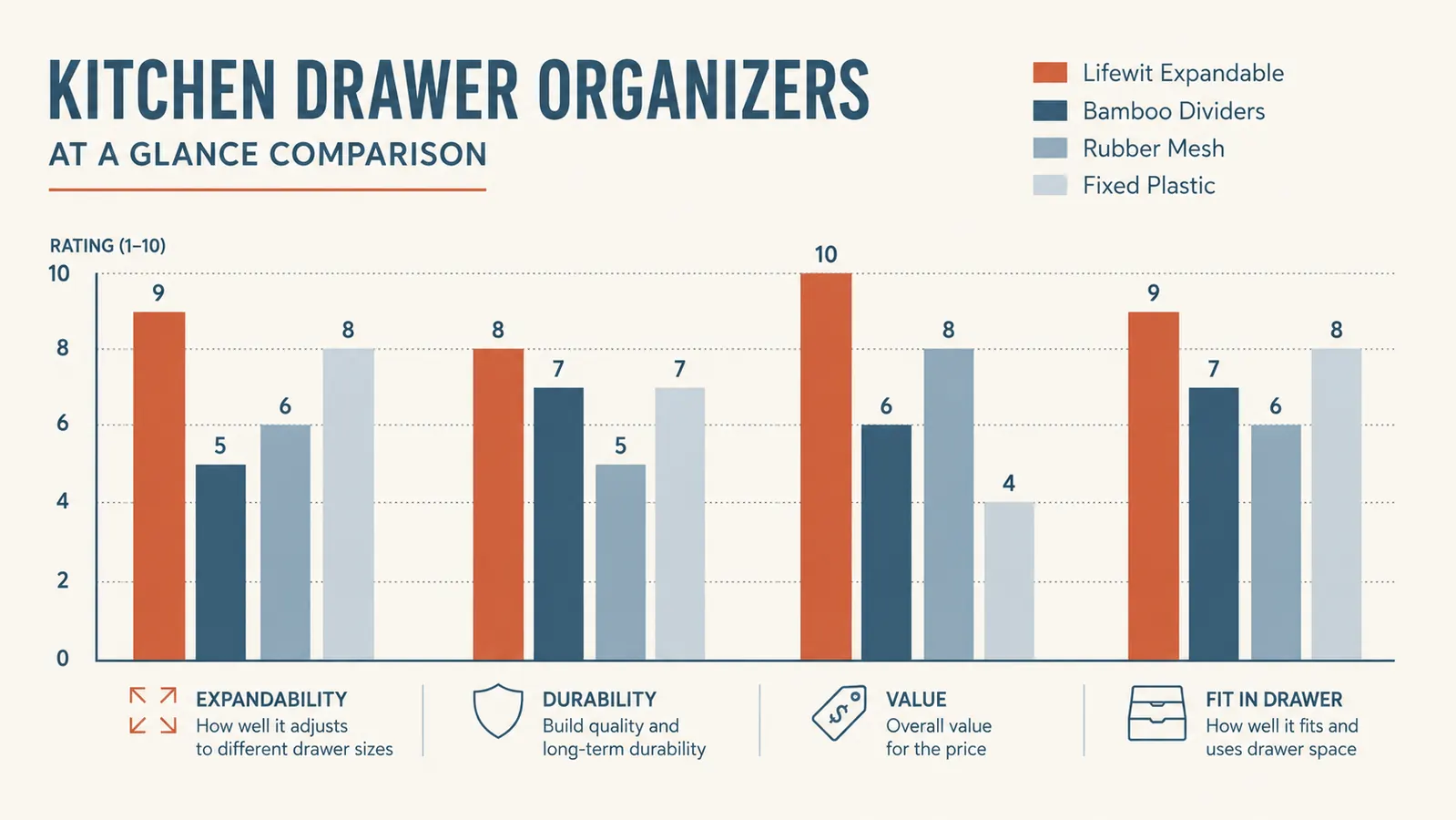
Also good for anyone who has already tried fixed-width trays that did not fit, or bamboo dividers that slid around. The expandable mechanism is the one thing that sets this apart from every cheap plastic tray at a dollar store, and it is actually functional. For a comparison of the Lifewit against bamboo dividers on fit, materials, and longevity, see the dedicated head-to-head article linked below.
Who Should Skip It
Skip it if you have a deep drawer over 20 inches and no plan for the dead zone behind the tray. Skip it if you primarily cook with large utensils and want everything in one organized drawer. Skip it if your drawer is under 12.5 inches wide. And skip it if you care deeply about kitchen aesthetics and want something that photographs well for a home decor post. The white plastic looks fine and functional in a closed drawer. It does not look great pulled out on a counter.
For a broader look at how to tackle the whole kitchen drawer system room by room, the how-to guide on decluttering kitchen drawers with a utensil tray walks through the full approach including what to put in the dead zone behind this tray.
Still digging for a fork every morning? The Lifewit fixes that for less than the cost of a decent coffee.
Width range covers 13 to 18.5 inches, no tools needed. BPA-free, dishwasher safe, and backed by over 30,000 Amazon reviews. Now that you know the real dimensions, check today's price and see if it fits your drawer.
Amazon Check Today's Price on Amazon →