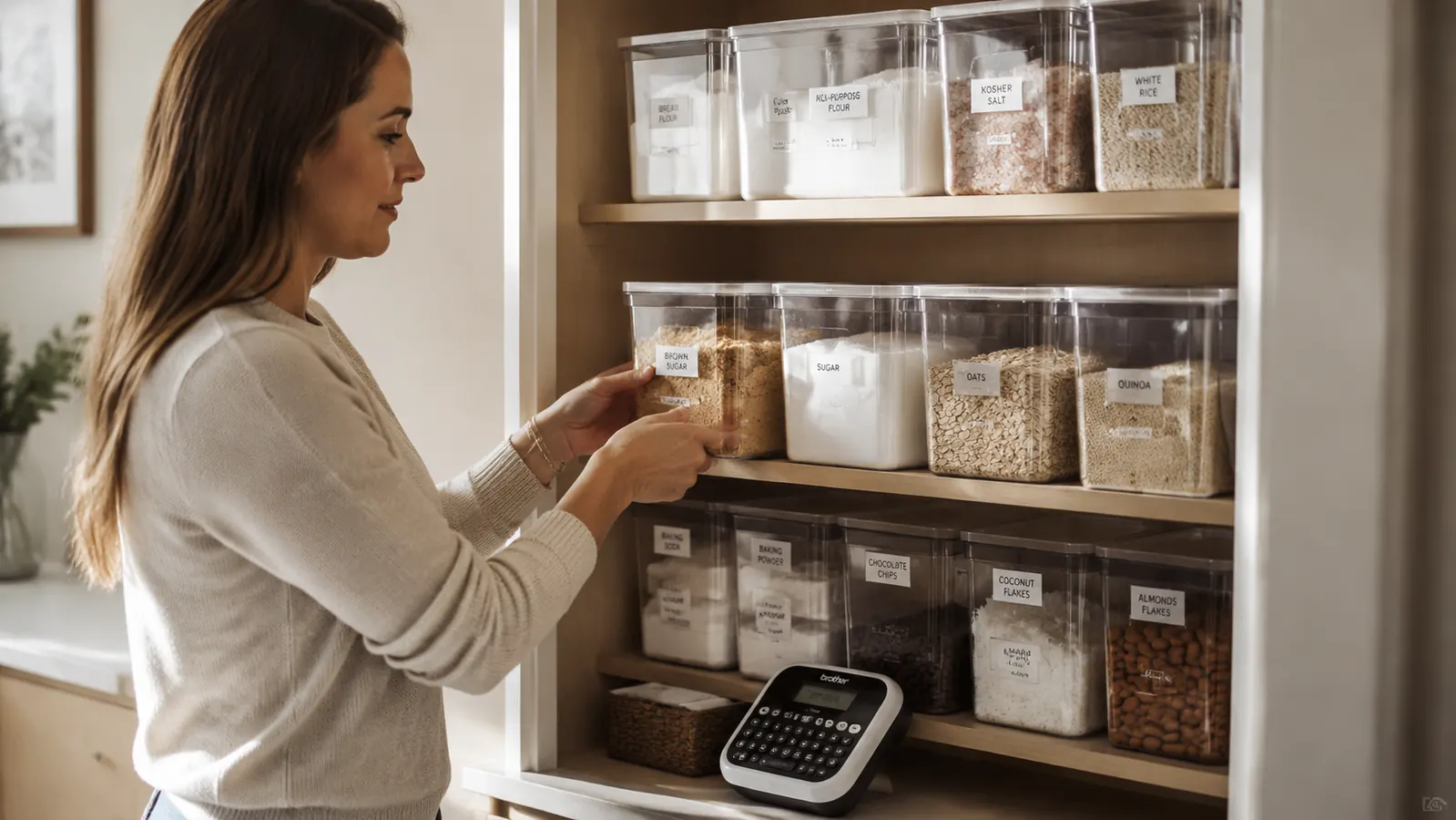
I want to tell you about the moment I realized my pantry was only organized for me. I'd spent a Sunday afternoon last spring pulling everything out, sorting it into bins, lining up the shelf risers just right. It looked genuinely good. Clean lines, matching containers, nothing shoved sideways. I felt like I'd solved something. Then my husband walked in and asked where we kept the rice. It was right in front of him, in a clear bin, third shelf from the bottom. He had no idea. My daughter came in an hour later and opened every cabinet in the kitchen looking for the oatmeal. Same deal: it was in the pantry, in a bin, no label. That's when I understood what I'd actually built: a system that only worked because I was the one running it.
I'd resisted label makers for a long time. They felt like the kind of tool you buy because an Instagram reel makes it look fun, use twice, and then store in a junk drawer forever. But after that rice incident, I decided to try the Brother P-Touch PTD220. It was budget-priced on Amazon, had several thousand reviews, and the listing wasn't covered in breathless marketing copy, which I always take as a decent sign. I ordered it that night.
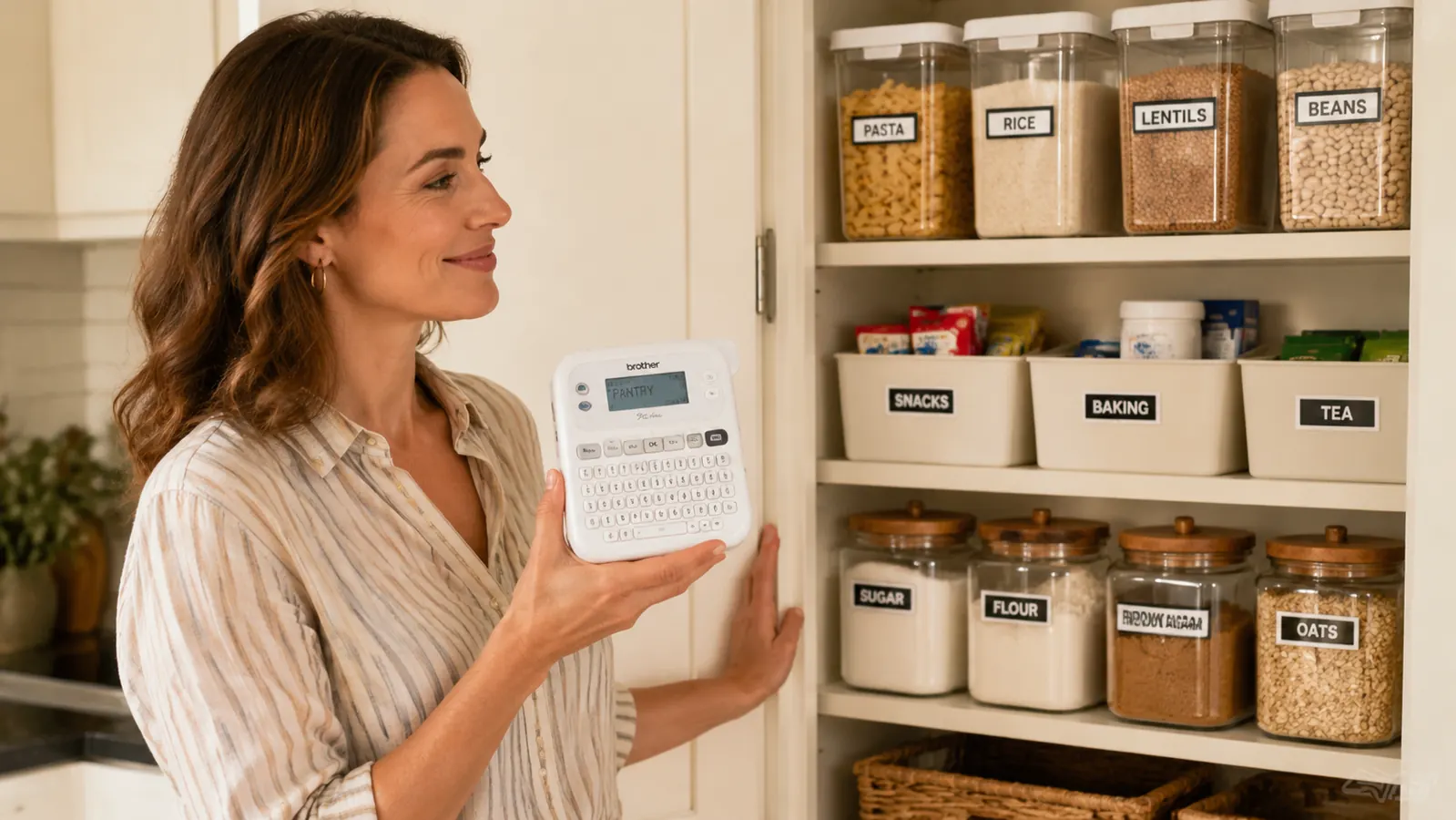
It showed up two days later in a compact little box. The machine itself is smaller than I expected, about the size of a thick TV remote, white plastic, solid enough that it doesn't feel like it'll snap if you drop it. Loading the TZe tape cartridge took me about forty-five seconds the first time. The keyboard is tiny but the buttons are distinct enough that you don't mash the wrong key constantly. I printed my first test label, PASTA, in about a minute flat. Stuck it on the front lip of the bin. Stepped back. Said out loud to no one in particular: why did I wait this long.
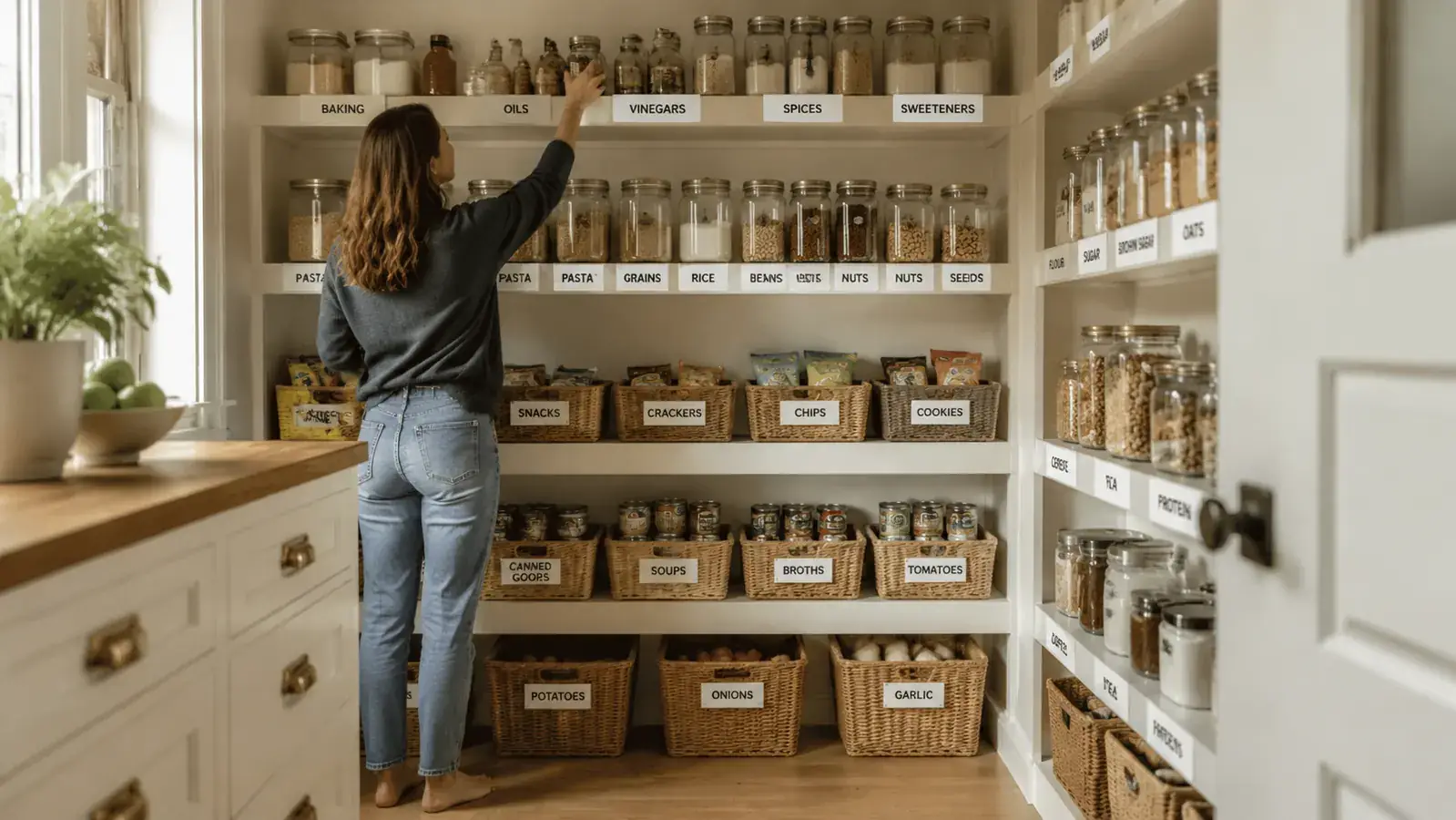
I labeled the whole pantry that same afternoon. Every bin, every basket, every section of open shelving. RICE. OATMEAL. BAKING. SNACKS. CANNED GOODS. I did some in all caps, some in title case, experimented with one of the slightly larger font sizes for the upper shelves so you could read them from across the room. The tape sticks well to plastic, wicker, and the wood laminate shelf lips I have in this rental. It peeled off a wicker basket cleanly when I wanted to redo that one, no residue, which matters a lot when you're renting and you can't leave marks on anything.
My husband found the rice on his own the very next day. He didn't say anything about it. He just found it. That's the whole point.
Your family can't read your mind. A label can do it for them.
The Brother PTD220 is compact, prints clean TZe labels, and fits in a kitchen drawer when you're done. Check today's price on Amazon.
Amazon Check Today's Price on Amazon →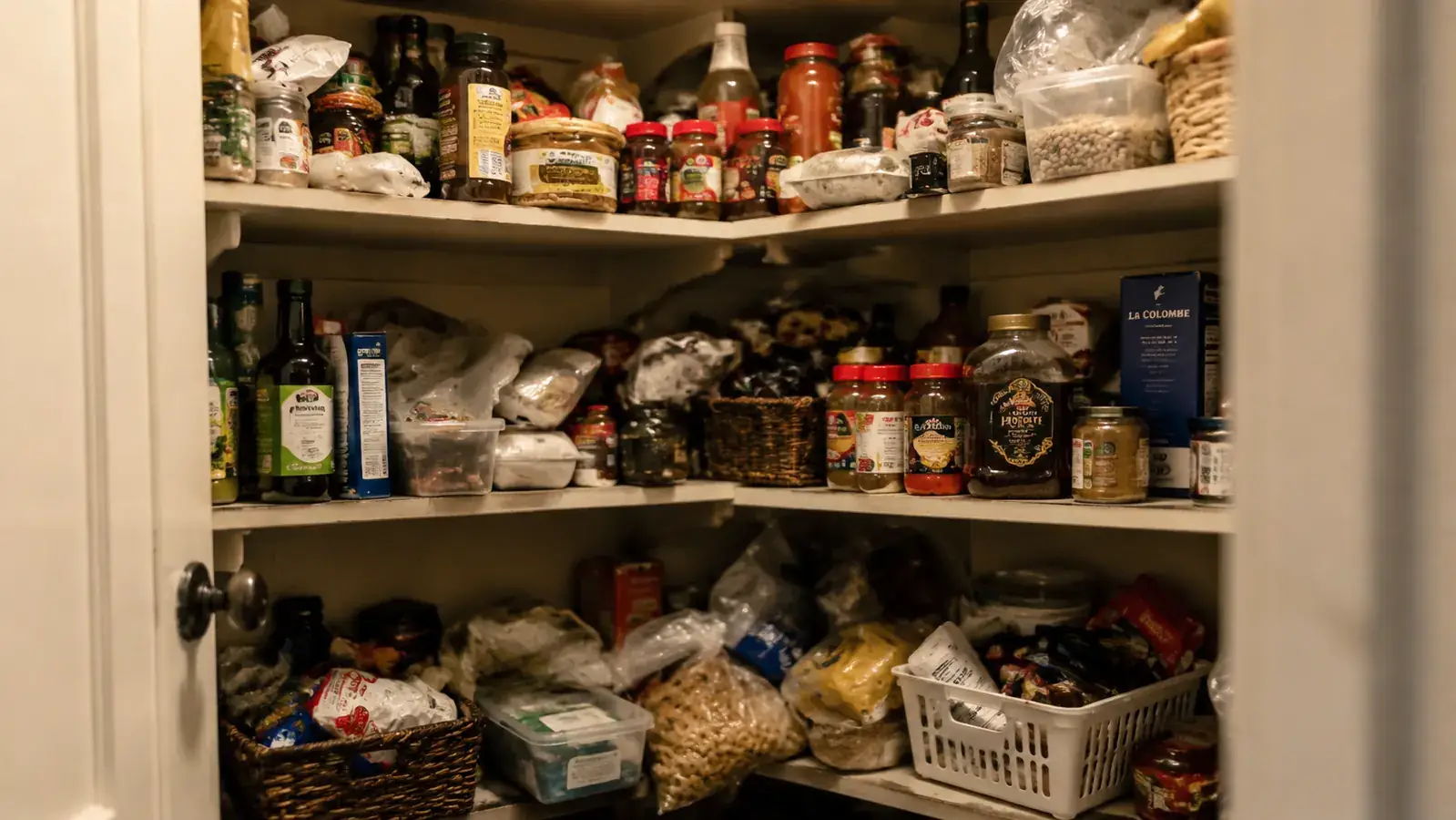
Three months in, the pantry still looks the way it did on day one. That has never happened before. Every other time I've organized a space, it lasts about two weeks before it starts drifting back toward chaos. This time it's held because the labels do the work of remembering where things live. My daughter knows where the granola bars are. My husband restocks pasta in the pasta bin without being asked. The system runs itself, which is the whole point of a system.
I've since used the PTD220 on other spots around the apartment. The bathroom cabinet got labels for the shelves: MEDICINE, FIRST AID, HAIR, SKIN. The linen closet, which had been a rotating disaster of folded-and-unfolded towels and mystery sprays, got four labels across four zones. My daughter's craft bin got labeled sections for markers, colored pencils, scissors, and glue. Each of those took maybe ten minutes including loading the tape. The labels are uniform, clean, and do not look like a kindergarten project. They look intentional. That matters to me.
A few things I'd tell you before you buy it: the tape cartridges are a recurring cost. Each roll does a lot of labels, but eventually you run out and you're buying a new one. The standard white-on-clear or black-on-white TZe tape runs about eight to twelve dollars a roll depending on width, and Brother is the only brand that works reliably in this machine. Budget for two rolls a year if you're doing a whole home. Also, the font and layout options are limited compared to a more expensive label maker. You're not going to be doing elaborate custom designs. For most people that's fine: clean block text on a white background is exactly what you want. If you need decorative labels, this isn't the tool. If you need labels that actually stick, are readable from four feet away, and don't peel off in a humid cabinet, this is the tool.
What I'd Tell You If We Were Sitting at My Kitchen Table
Here's the honest version: organization systems fail not because people are messy, but because the system only makes sense to the person who built it. You know where you put the rice. Nobody else does. A label maker solves that specific problem at a cost that's basically nothing compared to the bins, baskets, shelf risers, and drawer organizers you probably already own. The Brother PTD220 is not exciting. It's a small machine that prints small labels. But if your household runs anything like mine did, and you've done all the physical work of organizing and then watched it slowly fall apart because nobody else could read your mind, this is the missing piece. Budget-friendly and one Sunday afternoon. You already did the hard part. Let the labels do the rest.
The bins are already there. The labels are the part that makes them work.
The Brother PTD220 prints clean, durable TZe labels for pantries, closets, cabinets, and anywhere else your organization system keeps falling apart. See today's price on Amazon.
Amazon Check Today's Price on Amazon →